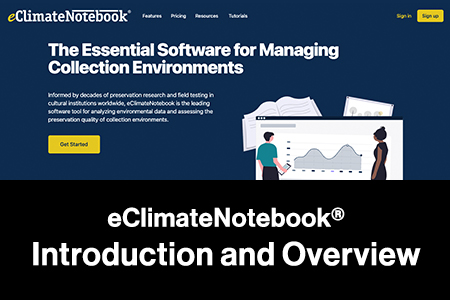
In 2004, IPI released ClimateNotebook, the first desktop software designed specifically for libraries, archives, and museums to graph environmental data and generate reports with preservation analysis. In 2012, eClimateNotebook (eCNB) was launched. A web application that synthesized the strengths of ClimateNotebook, and IPI’s other preservation management tools (MyClimateData and PEMdata) into a single, unified platform.
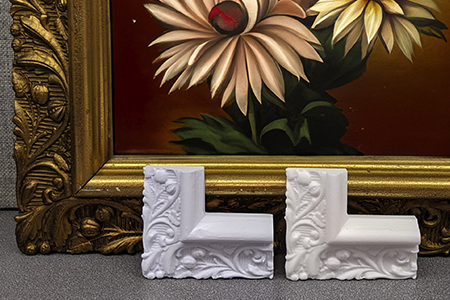
The Image Permanence Institute has been awarded $315,854 from the National Endowment for the Humanities Research & Development grant program to support a three-year research project titled, Evaluating the Mechanical Stability of 3D Printed Materials to Inform Collections Care Decision Making for Preservation and Access.
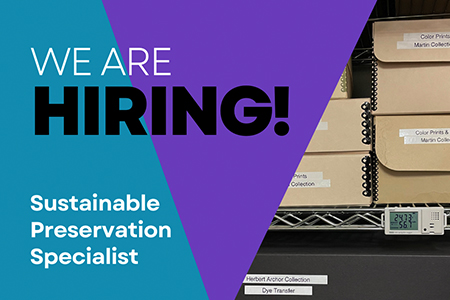
IPI is looking for a new team member in a redefined Sustainable Preservation Specialist role. The Sustainable Preservation Specialist supports professionals working in collecting institutions with environmental monitoring and sustainable preservation practices. They assist collecting institutions with basic environmental monitoring and data analysis, advise on logger placement in collection storage and exhibition spaces, and provide instruction on the use of IPI’s data management and analysis software, eClimateNotebook.
Xinxin Li is IPI’s new 3D Design Assistant working under the supervision of Meredith Noyes, Research Scientist, as part of the IMLS-funded project Foundational Research to Inform Preservation Guidelines for the Creation, Collection, and Consumption of 3D Printed Objects in Museums. Xinxin is a MFA candidate in Industrial Design at RIT and comes to IPI after receiving her BFA in Industrial Design from Savannah College of Art and Design.
A quarterly newsletter providing information and research to the preservation field.
Newsletter Archive